

Advocacy Beyond the Pantry
Updated: Aug 1, 2025
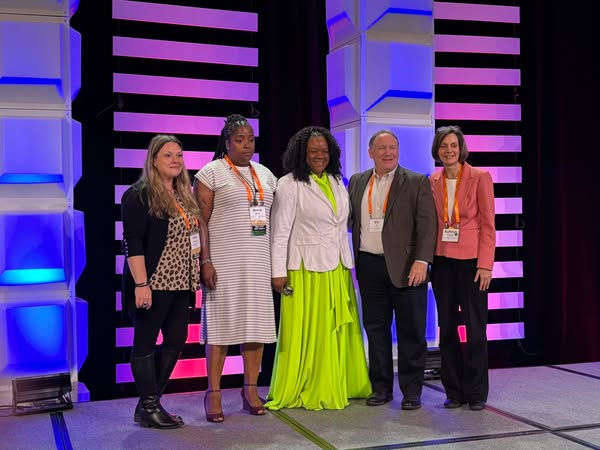
“You have to put a face to policy.”
That belief is at the heart of Fanta Dorley’s work. As the founder of Journey Adult Day Center in Greensboro, she works closely with adults and seniors with disabilities—many of whom quietly struggle with food insecurity in ways that are rarely acknowledged in policy papers or legislative agendas.
Through her partnership with the Second Harvest Food Bank of Northwest North Carolina, Fanta has emerged as a passionate advocate—using her lived experience to spotlight gaps in our food system and champion solutions that reflect the realities of the people she serves. Her path from caregiver to changemaker is a powerful reminder that lasting progress begins when community leadership and policy work hand in hand.
It all started with a troubling pattern Fanta could not ignore. “I kept seeing my clients coming back from food pantries with bags full of sweets, bread, things they couldn’t eat,” Fanta recalls. “They needed nutritious, fresh food and weren’t getting it.”
Fanta knew this could not stand, so she reached out to Second Harvest so her patients’ diets could improve. That connection opened new doors. In 2023, she joined the food bank’s Community Leadership Academy—a training program designed to equip grassroots leaders with the skills and confidence to advocate for lasting change.
“It was eye-opening,” she says. “I learned how to speak up, collaborate, and lead in a way that brings people together.”
Before long, Fanta was bringing her voice to the national stage. She joined Second Harvest’s advocacy delegation in Washington, D.C., meeting with lawmakers and federal agencies to share what food insecurity looks like in her community. She did not bring briefing documents or talking points—she brought stories.
“There’s a woman I mention a lot,” Fanta says. “She’s a retired teacher, worked all her life. Now, she’s getting $13 a month in food stamps. She’s living with her daughter because she can’t live alone anymore. But because they live together, their combined income disqualifies her from getting more help. That’s the reality for so many people.”
In D.C., Fanta met with staff from the offices of North Carolina lawmakers, including Senator Thom Tillis and Congresswoman Virginia Foxx. Some meetings were affirming, others more routine—but to Fanta, every conversation counts.
“I believe in planting the seed,” she says. “Maybe they don’t act today, but maybe a year from now, something I said will come back to them.”
That perspective resonates deeply with Jan Jones, the food bank’s Director of Public Policy, who has traveled to Washington almost every year for over a decade.
“I can talk about policy all day,” Jan says, “but when someone with lived experience—someone like Fanta—is in the room, it changes the conversation. It shifts the energy.”
Jan has seen firsthand how public policy can either deepen or reduce hunger. A sticky note on her desk bears a quote that grounds her: “Charity is not enough. Charity cannot do what can be more effectively done through policy.”
That was especially clear during the COVID-19 pandemic. Expanded SNAP benefits, universal school meals, and other federal relief policies helped prevent a spike in food insecurity, unlike the Great Recession in 2008.
“These were policies that worked,” Jan says. “They showed us what’s possible when the government steps in with real solutions.”
Today, Fanta and Jan work together to advocate for better food access and expanded benefits on the national level. In North Carolina, Second Harvest also pushes for practical reforms—like simplifying the nonprofit sales tax refund process and ensuring disaster relief funds support long-term food recovery after events like Hurricane Helene.
While Jan focuses on meetings with lawmakers and aligning with nationwide coalitions, Fanta brings the human side. Her stories remind legislators that policies do not live on paper—but in people.
“Advocacy isn’t about fighting,” Fanta says. “It’s about standing up for your community. It’s about using your voice so people know they haven’t been forgotten.”
For both women, advocacy is more than a strategy—it’s a responsibility. And as long as the need persists, they will keep showing up.


